"Visions of World Benefit & Global Responsibility: Perspectives of McGill Students


Showing posts with label 100 CONCEPTS FOR THE 21ST CENTURY. Show all posts

Wednesday, August 8, 2007

3 important concepts in 21 century

Concept#1: Bio-nano Convergence
After experienced the industrial revolutions in human history, we are now in a new ear and a globaltechnology revolution is rapidly changing the world. It covers various field of studies, including genomics, cloning, biomedical engineering, smart materials, agilemanufacturing, nanofabricated computation devices, and integratedmicrosystems and so on. This amazing movement may have positive or negative effects on human health and becomes the most essential improvement in both the quality and length of our human life. At the same time, Biotechnology helps us to identify, understand, manipulate, improve, and control many living organisms (including ourselves) on this planet. Furthermore, Nanotechnology is the science and technology of building devices and it has a huge application in our future life. It mainly focuses on the concept of engineering functional mechanical systems at the molecular scalepotentially, this new technology will be able to replace microelectronics and many fields with tremendous application in the areas of medicine, electronics and material science. One day, with the combination of material convergence and biotechnology, a new science called Intelligent Bioscience will be created and it will lead us to a disease free, happy and more intelligent human life.

Concept #2: Hunger and World Poverty
World poverty has become a huge global issue and disturbed the majority of the world’s people and nations, especially in developing courtiers. In fact, there are about 25,000 people die every day from hunger or hunger-related causes and there is about one person every three and a half seconds [2]. Particularly, children die most often since they are weaker than adults. In reality, there is plenty of food in the world available but most of them are in developed country. Some people in the developing country have no access to enough food for their survival; so hungry people are trapped in severe poverty. They are either lack the money to buy or have access to enough food to nourish themselves. This phenomena usually exists in the whole family. The sickness comes to them after long term malnourished so they become weaker and weaker. This makes them increasingly lack the ability to work, which leads them to be even poorer and hungrier. Fortunately, some non-profit organizations have developed many effective programs to help these hungry people. For adults, there are “food for work” programs where the adults are paid with food to build many facilities in order to help them from being hungry and make them work for the society. For children, there are “food for education” programs where the children are provided with food when they attend school. This special educational program will help them to escape from hunger and poverty.[2]


Concept# 3: Human Development Index
The Human Development Index (HDI) is a proportional measurement of “life expectancy, literacy, education, and standard of living for countries worldwide. It is a standard means of measuring well-being, especially child welfare”[4]. Furthermore, it is a new criterion of measurement that is used to determine whether a country is a developed, developing, or underdeveloped country. Also, the new method measures the impact of economic policies on quality of life at the same time.

There are three criteria are used to determine the average achievements in a country of human development:
• LIFE EXPECTANCY AT BIRTH,
• ADULT LITERACY RATE AND GROSS ENROLLMENT RATIO
• GROO DOMESTIC PRODUCT( GDP) AND PURCHASING POWER PARITY(PPP) in USD.


Reference:
1. Technology Convergence,
2. Hunger and World Poverty,
3. Cause of Poverty by Anup Shah, Monday, July 02, 2007

4. Human Development Index, Wikipedia

Wednesday, August 1, 2007

Spiral Dynamics

Spiral Dynamics was first introduced in 1996 by Don Beck and Chris Cowan. Spiral Dynamics focuses on the flexibility of human nature through the belief that, in certain conditions, humans will adapt to their surroundings by constructing a more modern, but more complex model with the intention of making their living better by conquering any further problems. The framework of each new model includes all previous models, which are structured around First tier and Second Tier vMemes: “systems of core values or collective intelligences, applicable to both individuals and entire cultures.”

Spiral Dynamics enlightens the idea that leaders and managers can understand organizational culture more thoroughly. For instance, leaders can address human factor dilemmas because Spiral Dynamics describes them in a language that reaches far beyond the usual demographics. The significance in Spiral Dynamics is its applications allow the analysis of micro and macro systems of human and cultural behavior.

Spiral Dynamics enables organizations to build effective teams and can help leaders manage change in a positive way, effectively introduce changes and build teams that enable members to use all of their aptitudes. The techniques and tools provided by Spiral Dynamics can prove to be essential when trying to increase interaction between individuals, motive your employees and inspire productivity.

Spiral Dynamics can have an extremely positive impact on management and organizations
through its learning approaches, management styles or other techniques that enhance and
enable good organization behavior within a workforce.

Panarchy

Panarchy is a means of viewing global development, and contradicts the traditional understanding of world hierarchy as being static and impervious to change. The term was invented by Belgian political scientist Paul Emile de Puydt in 1860. The essence of panarchy is the rationalization of the historical (and contemporary) relationship between change and persistence, and likewise the predictable and unpredictable.

In its application to social and ecological systems, panarchy provides a basis for understanding the pattern of historical events by mapping them into a comparison of one series of occurrences and changes to another. The adaptive cycle encompasses four forces: exploitation, conservation, revolt, and reorganization. Panarchy places great emphasis on the fact that, no matter the social, ecological or political system, small changes can have an impact of large events and vice-versa.

The significance and importance of the adaptive cycle lies in its application to control time effects by establishing limits and a tool for comparative analysis between seemingly different systems. The iterative application of this method would lead to rolling improvements in scientific understanding and contribute in turn to better informed and continuously improving management decisions.

Enneagram

The origins of the Enneagram figure, a nine-sided star polygon, can be traced back to Sufi Tradition of Central Asia. However, G.I. Gurdjieff is credited with its introduction through his teachings as a symbol representing fundamental universal cosmic laws. Used for diverse purposes and in different teaching schemes, the Enneagram is famously known as the Enneagram of Personality.

Being one of the more modern personality systems in use, it places emphasis on psychological motivations of the human being. The Enneagram has been used extensively by psychologists, but has found its way into the world of commerce.

The Enneagram teaches nine different ways of doing business in the world, nine different ways of approaching work and relationships and the value of each. “It can help project managers understand how personalities within a team can be effectively managed such that individuals can be involved in ways that are most productive, depending on their personalities and behaviors.

The Enneagram application in communication and team building are new applications that, properly applied, can provide major benefits to managers and leaders alike. Some of the benefits of its application to communication within a work place are gaining an accurate perception of yourself within a team, effectively expressing your ideas to your coworkers, understanding your own and others’ motivations and the numerous ways of communication. Communication improves interactions and relations with others while increases emotional intelligence. The Enneagram provides a complete framework for gaining new insight into our own motivations and leadership behaviors as well as for understanding others’ needs and opinions. It also helps us consider cultural and individual differences by providing one framework that can simplify the complexities involved in human relationships. The Enneagram can also be applied to understanding organizational cultures and sub-cultures.

Monday, July 30, 2007

STRATEGIC PARTNERSHIPS FOR GLOBAL BETTERNESS

At the onslaught of the global warming phenomenon and the increase in world health problems in the third world countries due to the various social evils of the society, it is necessary that the growing organizations of the 21st century join hands to form a non-profit developmental iuntura for eradication of causes which should slowly be on their path of extinction.
Some very evident examples are the collaboration between HBC and Breast Cancer Society. HBC itself manages a ‘Social Responsibility’ department; it is the grand purveyor of Canadian culture and history.
Drawing from the many targets set at major international standards, six major goals were identified in the areas of economic well-being, social development and environmental regeneration:
Reduction in the percentage of people below the poverty line by 2020;
Introduction of preliminary education in all the remotely accessible villages and towns in third world countries by 2020;
access to reproductive health services for all individuals of appropriate age by 2018; and
Implementation of national strategies for sustainable development in all countries by 2010 to ensure that current trends in the loss of environmental resources are reversed at global and national levels by 2018.
Progress towards gender equality and empowerment of women
§ Reducing Child mortality rates

Decentralization

Decentralization is the reassignment of power and liability for public functions from the central government to subordinate or quasi-independent government organizations and/or the private sector.
It encompasses varied functions which must be carefully taken into consideration and should support reorganization of financial, administrative and service delivery systems. For the 21st century, as the world takes on the vital role of becoming a global village, market decentralization is important to the effect of creating an equating realm for advancement throughout the nations of the world.
Decentralization can be administrative, fiscal, political and market-oriented in nature. Privatization and deregulation they shift responsibility for functions from the public to the private sector. Privatization and deregulation are usually, but not always, accompanied by economic liberalization and market development policies. These are hence considered all inclusive. They allow functions that had been primarily or exclusively the responsibility of government to be carried out by businesses, NGO’s and subordinate government/ private sector bodies.
Centralization and decentralization are not "either-or" conditions. They should exist in perfect symbiosis with each other, and this is balance, despite being precarious in terms of market infrastructure, should be the ideal combination for the nation’s goodwill. While decentralization may not be the solution in terms of standardized regime-strict businesses, it does help cut out the unnecessary bureaucratic procedures thus strengthening the **
In the coming decade, decentralization will be the critical challenge for the technology, media and telecommunications industries. Each has developed with the assumption that powerful central forces will manage development. Centralized systems are failing for two simple reasons: They can't scale, and they don't reflect the real world of people.
In fact, if I speak for my profession, internet and wi-fi are 2 perfect evolutions of the decentralization concepts. Microsoft has broken barriers with Apple, and numerous parallels abound. Thus decentralization is the new calling for next century.

21st Century Career Trends

The world is growing into a realm of never-ending and often self-destructive complexities. Since its origin, livelihood has been based on survival, money, growth and exploitation. Man has engaged and flourished in various roles through the centuries and build up an atmosphere capable of more ingenuity. Careers have undergone a rapid upward graph for themselves, inventing and reinventing newer opportunities and horizons.
The 20th century was highlighted by the information technology boon and brain drain. These are slowly receding as a result of public policies by governments to nurture their native talent. The prospective CEO and other managerial positions seem to be continuing with a decaying growth. Other positions binding the world as a combined conlegium and attending to the call of world’s problems will seem to be at the front. Networking, Web-technology and intensive software testing will hold the fort. Some trends:
Philanthropists: These classes of people donate their time, money, and/or reputation to charitable causes and make a major impact through their volunteering, such as a person who manages a philanthropic organization. J.K. Rowling is, for instance, a philanthropist advocating social equity and president of One Parent Families. Bill Gates is another example.
Global Activists: As a part of World organizations such as the United Nations’ UNESCO, there will be a class of people
E-commerce CEO - This position is in the greatest demand at pre-IPO companies that are starting to generate revenue and brand. E- Commerce is a successful business network with biggies such as paypal, yahoo, ewise etc, operating efficiently.
Human Resources Department- a whole new potential in this field because of the immense globalization.
Global Network Architects - With telecommuting on the rise and the high demand for sharing and accessibility to data, the person who understands the connection on both the local, wide and global fronts will be in most demand.
Financial trade analysts will have a key role in assessing the twists and turns in complexities of growth and innovation in the 21st century.

RICHNESS AND RESPECT OF DIVERSITY

“The Melting Pot”

If we were to count all unique fingerprints around the world, we would be drowned in a sea of diversity. Each of us has been born with an individuality in order to make a specific unique contribution to our society. In various communities found today, it is inevitable to have numerous encounters with people from different backgrounds simply by listening to the different languages spoken around us. As early as kindergarten, and through out our lifetime, we will be exposed to the diversity and cultural richness of the world. However, have we embraced this diversity and learned from our peers? It is now, more than ever, vital to profoundly understand all ethnical backgrounds and religious beliefs that exist. This can be accomplished by adopting new initiation and learning programs such as diversity training and conferences in order to eventually eliminate prejudice and discrimination.

The definition of diversity states that it is an inclusion of diverse people (as people of different races or cultures as well as language and lifestyle) in a group or organization. In addition to the more than obvious of diversity, there are also significant variations in the way societies organise themselves, share their perception of morality, and interact with their environment. However, uniformity, assimilation and separation alike have been predominant for several decades. A simple example, such as the Durham Report of Assimilation, posted in 1839 by Lord Durham, stating that the French speaking Canadian should be assimilated into the British English speaking population. However, more ethnicities have immigrated since then and forms a spectra of diversification not seen in the past. Therefore, it is essential to counter the cultural impoverishment and disassociate from assimilation and homogeny. Industrial, political, environmental as well as social realms will benefit from the acceptance and respect of diversity. It is often said that the major gap between cultures is the language barrier. However, with the emergence and popularization of linguistic learning demonstrates a multi-linguistic shift. Having the ability to speak in different tongues is not only highly valued but also more and more demanded in various fields. Learning different languages permits to engage in an in-depth discussion, which encourages and provides an opening to sharing of knowledge. Once a dialogue has been created, many opportunities may arise such a profound understanding of values, cultures and religious beliefs, which will eventually lead towards the acceptance of diversification.

In due course, bridging the gap between ignorance and cultural diversity is critical. Progressive movements have already been instilled in our communities such as art galleries portraying a cultural mosaic, diversity-training programs and conferences. For instance, the University of Ohio held a conference promoting diversity in their Diversity Action Plan, which promises the following: Progress towards a campus that fully welcomes difference will depend upon the ability of each individual to respect the diversity of others. In addition, many artistic creators depict a more unified and multifaceted world. “The Melting Pot” painting by Pedro Uhart illustrates how we can be part of a unified civil society where we can learn and discuss about specific diversity issues such as human rights which in fact relates to us all.

WASTE WATER TREATMENT

“Water, The Source”

The most important and essential element of the ecosystem and of life is water. The incessant decrease is water quality is due to the constant addition of undesired compounds, which is mainly due to several water contamination sources. Industrial, domestic, agricultural activities and global changes are undoubtedly responsible for this decline, as a result groundwater as well as surface water is no longer suitable for drinking because of the increasing presence of toxic compounds. Therefore, the demand for new and effective water treatment and recycling technologies is greater than ever.

The need for efficient and rapid wastewater treatment has become on going concern for the past few decades since drinking water is progressively becoming more and more scarce. Many developments, in this regard, have one focus: water treatment. In the current wastewater treatment industry, unit operations such as primary, secondary and tertiary treatment are combined in order to obtain potable water. The primary treatment consists of a physical purification process with the use of grit chamber, which essentially separates solid from liquid matter. The secondary treatment involves the chemical and biological processing of wastewater, thus chemically eliminating harmful pathogens. Finally, the tertiary treatment is where wastewater is converted in drinking water.

Assortments of wastewater treatment technologies have been proposed such as reverse osmosis, micro and ultra filtration and electrolysis technologies. Disregarding the implementation of these new technologies will have dire consequences, which will not only affect countries that have great water resources, but more so, the populations deprived of potable water as well as the micro organisms from the water sources. However, the major challenge that the wastewater industry faces is the economical feasibility of adopting new technology. Many governments across the nation have considered privatizing this resource with the expectation of providing the financing for this section. Never the less, privatization will have negative effects on countries with the inability to purchase water or put the new technology into operation.

On the other hand, electrolysis is a water-recycling technique that is in early stages of development, which is deemed promising in the near future. Water electrolysis is a chemical technology, which consists of permitting water-soluble ions to pass through selective ionic membranes under electrical current. This will enable the dissolution and effective removal of pollutants. Incorporation of this technique in already existing wastewater plants will not only be beneficial in improving water quality , but is also fast, cost effective and easy to maintain.

With potable water becoming more and more limited, not only do the governments and industrial corporations accept responsibility of this truth but also the consumers and end-users of this resource. If people refuse to adjust and constantly want uninterrupted showers, consequences such as privatization of water is foreseeable.

Therefore, in order to adequately integrate the new technologies, and if considered, water privatization, the following guidelines must be followed: significant reduction in the amounts of water consumed by the end-user as well as industries (by charging for excess use), governments conduct transparent regulatory frameworks and private enterprises should adopt policies to better help the water-deprived population.

WAR ON THE MIDDLE CLASS

« A Thinning Line»

The structure of societies has been rapidly shifting since the beginning of the 20th century. Emergence of economic powers namely China, India and Asian Peninsular (for example Japan and Hong Kong) and drastic changes into structured organisation at the work place have equally impacted with technological advancements. Who is negatively affected by all this change? The middle class, now more than ever, suffers the burden of automation at the workplace as well the migration of overseas of corporations attracted by cheap labour. The “War on the Middle Class” is a reality that leftist and rightist politicians have to face in the United States and other democracies.

In the past, a hierarchical social class was set to define and divide groups of persons according to income earned, profession and even education. Most were categorized in classes such as upper class, middle class, working class and lower class. In the 1950’s, the United-States middle class formed approximately 50% of its populations. Moreover, since the 1970’s there has been evidence of a steady yet slow decline of this class. However, with the ever increasing demand and push of technology, the middle class has been shrinking at an even fast pace since the 1990’s. This trend can be explained by the occupational restructuring and earning by occupation.

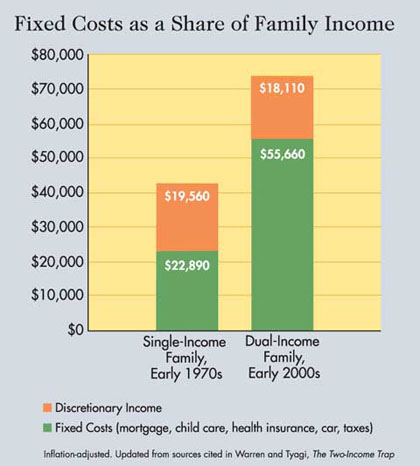
Baby boomers have piously trusted in a future rosier than the present, millions of households are borrowing so much money that they end up endangering the very future they hoped to build for themselves. The lower and middle classes have practically given up on putting aside any savings. Fixed costs have risen correspondingly with the increase in household incomes. This means two-income families are no longer able to cope. Besides, the current trend is mostly shifting into a consumer society rather than a productive society. They are going into the 21st century like a poverty-stricken, Third World family, living from hand to mouth without any financial reserves.

Globalization is striking back. The United States including the G7 countries have promoted worldwide exchange of commodities like no other nation, and the result is that their local industry has started to erode. Some production sectors, such as the furniture industry, garment industry, consumer electronics, many automobile spare part suppliers, and now computer manufacturers, have left the country for good and finding cheap labour access in other countries. The Ultra-wealthy have always been around and have expanded wildly over the past 20 years, thanks to a combination of 3 elements: a) a technological meritocracy; b) a readily available method of cashing out the benefits of that meritocracy via options and the stock market and finally c) a significant drop in the highest tax brackets. The 'ultra-wealthy', meanwhile, are able to take advantage of two trends: the genuine expansion of opportunity brought about by expanding productivity and more free markets and the intentionally inflationary policies of government and the Federal Reserve, which deliberately remove purchasing power from the middle class and transfer gains to the ultra-wealthy in the form of leveraged profits on paper assets.

Education has become so expensive that many students graduate with huge debt loads; this has profound implications for the future of the middle class. Therefore, new organisations must be provided in order to counter the thinning middle class otherwise, many people eager for a higher education will not have the opportunity to do so.

Global Warming and Geological CO2 sequestration

In the 21st century there hasn’t been a hotter topic for discussion than global warming. One side believes that we are in eminent danger and that the future consequences are catastrophic if we continue on this path. The other side believes there is no proof that anthropogenic production of CO2 is the culprit of global warming. The basic essence of this debate is that due to human industrialization humans are dumping greater amounts of CO2 in the atmosphere. Our atmosphere is composed of many gases which prevent radiation emitting from the Earth to leave. In essence these gases “capture” this energy and redirect it back to the Earth. This allows temperatures on Earth to be livable instead of a chilling -18 ºC by some accounts. Some people fear that by generating more CO2 we are upsetting the delicate ecological balance which is therefore driving up temperatures. Although there is lots of controversy on either side, one thing that both sides fail to understand is that doing something is better than nothing. One possible solution is that instead of venting CO2 to the atmosphere, one captures the gas into a stable geological formation. This is also known as geological sequestration of CO2.

Geological sequestration is at the present moment still at an very early stage of development, although great advances are being done in the field. There are three main forms of subsurface geological sequestration, this includes: injection to a saline aquifer, injection into depleted oil and gas fields, and finally injection into unmineable coal seams. The best example as of yet of CO2 sequestration is the Sleipner project by Norway’s Statoil. This project came about when Statoil wanted to sell gas but the field contained 4.0-9.5% CO2. Unfortunately for Statoil at the time, gas sales required CO2 to be at 2.5%. Instead of venting 1 megaton of CO2 each year, Statoil decided to reinject the CO2 into the saline aquifer which was 800 meters below the sea bed. In doing this Statoil decreased Norway’s CO2 emissions by 3% and the company saved some valuable taxes which would have been enacted if they released the CO2.
The advantage of geological sequestration in saline aquifers is tremendous. For starters saline formations are very extensive worldwide and they have the potential to hold thousands of megatons of CO2. In the US alone, saline aquifers available to them are projected to be able to hold up to 500 billion tons of CO2. Economically speaking however, CO2 sequestration through saline aquifers may not be entirely suitable for some companies. In the case of the Sleipner project, it is unfortunately not 100% cost-effective. Some believe however that if carbon tax credits and carbon trading systems become more predominant in the future, the economics of this form of sequestration will be extremely cost-effective. As it can be seen from growing European trends, these taxations are most likely to increase in the future therefore making this solution economically viable.

In the end, it is important to recognize that this technology is still in the earliest stages of development. The Sleipner project is merely 8 years old. Some may think its “old” but even the light bulb has a longer time frame than the Sleipner project and during its 8 years of development the light bulb (incandescent) was extremely ineffective. What one must learn from the Sleipner project is that CO2 sequestration is a possible solution, even if temporary, to our growing CO2 emissions. As technology advances we may be certain that the efficiency and cost-effectiveness of this project will only increase. Furthermore we will also learn of new innovative CO2 sequestration techniques which may provide to be even more suitable than current saline aquifer projects. So while technology still tries to improve alternative energy resources, improve their efficiency, and improve energy efficiency in products in common goods; we may still be able to find innovative solutions to help lessen our impact on the environment.

Designing for the Environment

Ever since the beginning, life on Earth was sustained by the balance brought between all inhabitants on it from the most basic life form all the way to more complex ones. This intricate balance was achieved by one organism being able to utilize the “wastes” of another organism. This in turn led to a cyclical path which allowed species to survive without compromising the environment. However, as human civilization advanced we have strayed from this balance and have utilized the Earth’s resources with disregard on our impact to the environment. This complete separation of state with the natural environment was most prominent after the Industrial Revolution where industries tried to maximize productivity without any regards to the environment. With time we have observed that our actions on the environment are severe and the unbalance ultimate affect us. Sadly up to this age, many industries still disregard this impact and fear that considering this important factor would ultimate affect the bottom line. However, one must open our minds that what may seem like a negative impact may be extremely positive one. To realign itself and balance with the social and environmental circles, industry needs to adopt a new manufacturing process: designing for the environment.

Manufacturing any product carries an environmental burden. If one does not take this into consideration resources may not be optimized. To minimize this burden, manufacturing companies must first strategically analyze the whole production line of a new good and find what areas cause the most environmental burden. With these aspects determined, a company may then apply a wide range of techniques to minimize these impacts. This strategy can be summarized by what is known as the Strategy Wheel. This wheel is composed of 7 core parts: new concept development, physical optimization, optimize material use, optimize production, optimize distribution, reduce impact during product use, and finally optimize end of life systems. These concepts are quite extensive with many subcategories but its overall aim is to affect different aspects of a products life cycle to minimize a goods burden. To give one example, the first stage of the Strategy Wheel: new concept development, includes service availability. This strategy allows companies to profit from a sold good by providing servicing support to their product. It has been demonstrated that providing services increases profits as well as value to the product. In the past companies only obtained profit after distribution of their goods, therefore products had profit potential at one point in time. By providing service, profit may be earned at various periods in time. The advantage is obvious, if a product life is expanded there will be less resources required to remake that product for the user. This decreases an industries demand for raw goods and minimizes waste after the end cycle of the product.

One of the best examples on how designing for the environment positively impacted an industry is the redesigning of Sony’s televisions. By redesigning their televisions they were able to eliminate hazardous materials, decrease plastic consumption by 53% and increase recylability by 99%. One would believe that in this redesigning project Sony suffered significant costs and set-backs. On the contrary, Sony managed to reduce their cost by 30% and have higher productivity. Add to the fact that their product was then marketed as a more environmentally sound solution; they earned support and appeal by their customers.

The example from Sony is only one of many where some industries broke from the linear thinking of profit making and the common belief that applying environmental considerations to manufacturing will be detrimental to the company. In this modern age industry must realize that solutions are not linear and that in the end and that in many cases… nature knows best.

Bioremediation

Ever since human civilization existed, we have viewed our environment as the universal dumping ground. We adopted a belief that in its vastness, our impacts to it would be minimal or in some cases, the effects are insignificant as long as it’s not “in our backyard.” However throughout the ages we have begun to realize the dire consequences this kind of behavior has not only to the environment but human health itself. In this day and age pollution has become a global problem and many of our pristine environments have now been contaminated by xenobiotic compounds, some so severely that life has been intoxicated and in other cases become a toxic site. Although new technologies and regulations are preventing such catastrophic situations to arise again, we still remain with areas which are heavily contaminated. In this case the only suitable solution to restoring these areas is through remediation.

The main goals of remediation is to eliminate the site, both land and ground water, from any contaminants, prevent future contamination of said site, remove contamination that may have moved off the site, and finally prevent contamination from leaving the site. There are a wide variety of remediation methods such as hundreds of physical and chemical methods as well as biological ones. As of date, the most cost effective and eco-friendly approach to remediation is biological which is commonly termed as bioremediation. In essence, bioremediation uses bacteria, fungus, and in some cases plants to degrade xenobiotic components affecting a particular site. Of these, the most common organism used is bacteria. The reason why bacteria are commonly used is because unlike any other organism on earth they have had billions of years to evolve into thousands of species. Furthermore, bacteria excel at degrading numerous organic components which they utilize as a carbon and energy source.

The fist case of bioremediation was by cleaning up military sites. With time and knowledge this later expanded to soils contaminated with explosives, pesticides, oil spills and now application to polynuclear aromatic hydrocarbons (PAH) [a very toxic family of chemicals] with an incredible efficiency of approximately 90%. The ability for bacteria to degrade these chemicals have only widen and researchers are constantly finding new bacteria that may be suitable for such purposes or enhancing known bacteria to become better degraders of these components.
It is without a doubt that prevention is more cost-effective than treatment, and this is the case with remediation overall. However, with toxic sites already in existence, the problem can’t be neglected. The costs for remediation vary widely and is dependent on many factors like how “clean” do we want the site to be, volume of the area to be treated, type/s of contaminant/s, extent of contamination, type of treatment option (in-situ, ex-situ) and so forth.

Sadly, once humanity interferes with a pristine site, this location will never achieve its original state. Although bioremediation is an amazing technology that has solved and will continue to solve many toxic sites, once a site has been exposed to xenobiotic compounds it will never be able to achieve its original pristine state. Despite this, it is important to realize that the environment is resilient and even the most toxic of sites like Chernobyl can once again support life, even if it's different from its original state. As we reach the modern age of environmentalism, industry must not “compromise” on tackling the effects its operations have on the environment. The solutions are before our eyes, and despite the cost even if we can only take a given environment to 75% of what it was originally, this 75% less human health repercussions and 75% more life than what existed prior to remediation.

Global security and politics after September 11

The day of September 11 is one which will be remembered for many generations to come. It was the day that shattered whatever confidence and safety many felt in their own country. Like all historic tragedies, it did not simply impact one particular city or country, it rippled throughout the globe.The aftermath of 9/11 was a decrease in leisurely activities such as travel and tourism, a decrease in the stock market and sales as well as an increase in global security and military power. As it was to be expected, the American economy suffered greatly but according to Lee Price, the drop was not necessarily due to the attacks themselves. He states: […]Because of that trauma, we are spending more on security…our economic output is no lower today because of 9/11 and it may well be higher than it otherwise would have been . War is, and always has been, very expensive. Money is being put towards military funding rather than back into the economy. Tighter security may be the cause for low travel rates. The tighter security is not something that has only affected the Americas, many countries rely on tourism as the main source of income.I do not, in any way, claim that security is less important than economic expansion. I do believe, however, that the military has been given too much freedom to attack, with permission, when faced with minimal threat. “the UN Security Council adopted a Resolution in late September 2001 that declared that terrorism was sufficient grounds for constituting a threat to peace for which military self-defence may be invoked.” This particular concept is closely tied in with the second concept for many people are still debating the true nature of the war. An article by George L. Perry sheds light on the position of the US when it comes to oil “(as of 1980) U.S. consumption rose 16 percent over the following decade. U.S. oil production declined slowly and its share of world production fell to below 12 percent in 2000 from near 24 percent in 1970” .This debate is one which needs to be closely looked at by all those in powerful positions. The 21st century needs to be a time of strength, togetherness, co-operation and tolerance. We are slowly working backwards to a time where foreign affairs was strictly military-operated. A crash course in democracy may be what all politicians need.

ANNE L. FOURNEL

Demand for energy and water (Global energy and water management)

Hardly needing an introduction, the issue of energy and water is one which has been around for many years. Many people do not think of water as a resource as it covers approximately 71% of the Earth’s surface. It cannot be exhausted. Although water may be a renewable resource, it will soon become too polluted and even scarce in some parts of the globe to be consumed. The same goes for other types of energy, namely fossil fuels. Fossil fuels are now indispensable to the lifestyle we have become used to: “over 85% of our energy demands are met by the combustion of fossil fuels” . Soon, these fossil fuels will run out and the water will not be fit to drink. What will we do then? There have been great responses such as The Green Belt Movement , Friends of the Earth and Greenpeace .Fossil fuels have been extracted since the 1800s but it wasn’t until the 1940s that their utility and use became exceptional. Today, “coal power plants account for at least 60% of our national energy and 52% of the world's demand. We, as a world, burn approximately 1.9 billion tons of coal a year to generate electricity” . The burning of fossil fuel leads to pollution and has dire consequences on the environment as well as on the health of the masses. The need for fossil fuels is of great importance since countries are now going as far as waging war to gain as much access to these resources. natural resources as possible. Water is becoming as valuable as these non-renewable resources. People need water to survive. People who have water make the rules and others need to abide by these rules if they are to survive themselves. Human necessities are being held “captive” by enterprises looking to make a quick buck. Have we stooped so low as to make others pay for their life?Governments and other leaders need to recognize the damage being caused by the extraction and burning of fossil fuels as well as the careless dumping of waste into public water. Already, the “Green Movement” has begun which promotes ideologies such as sustainability, environmentalism, non-violence and social justice. Strict and more harsh penalties should be implemented and rewards given to “environmentally friendly” households and/or enterprises. The media also needs to be more involved: the public needs to be aware of how their actions affect the world they live in.

ANNE L. FOURNEL

Dot-coms and the new economy

In early 21st century, a new era of dot-com companies emerged where organizations use the internet to do business. There are companies selling manufactured goods and products like the e-bays, companies providing lodgings for example the hotels and also companies providing hotel packages. There are a variety of dot-com companies available now on the market for shoppers to surf through. Doing e-commerce is simple, is fast and it requires only a fast internet connection and credit card. So, basically everyone having web net connections can have the access to shop on dot-coms. Since it’s so convenient and simple to use, dot-coms creates the new economy of doing business at a global scale. The wide-spread use of dot-com makes it a very important tool for use. For example, the amazon.com sells millions of textbooks, novels, and maybe documentaries using just a website address. The site includes almost every book you want to find and serves as an interface between the seller and buyers. E-bays sells their product also online, and with the myriad of products, only a credit card number is required to purchase any of them. Nike company increased communication and feed-backs between buyers and sellers through a website where you can customize your own running-shoes. This increased communication and connectedness between people is a very innovative way of doing business. Also, the creation of chat rooms between buyers allow the company to know about comments to their products instantly through the internet and sellers can know more information about their products before buying it too.. The emergence of dot-coms will shape our ways to do business and evolve new rules. For example, instead of going to shops and get the products we want, we just have to connect to internet and order the product on the web. Many of companies then can order inventory according to the number of orders and eliminate the time it stays on the shelf. Dot-coms also allow us to customize our product and make it more convenient so buyers can get the exact product they are looking for. Dot-coms and the new economy created a bridge between people across countries. With this increased communication, new cultures will emerge as a combination of what has shaped it. For example, now the North American consumers like to purchase manufactured goods online made in Asia and Asians like to purchase electronics and cosmetics from the Westeners. Wal-Mart and Macdonald went to Asia and brought Western culture to Asian people. There is increased cross-cultural communiation and merging of the cultures to achieve globalization.Sources:http://65.61.27.230/HCAR/http://www.cbc.ca/news/background/healthcare/http://www.hc-sc.gc.ca/hcs-sss/pubs/acces/2001-certain-equit-acces/part1-doc1-exsom_e.htmlhttp://en.wikipedia.org/wiki/Biotechnology

HAOXI ZHANG

Biotechnology

The 21st century represents great advances in biotechnology. Biotechnology refers to those technical applications which use biological systems and its derivatives. It encompasses the study of gene, modification of gene to make new organisms and manipulation of genes to fulfill human needs. There are innovations developed such as the human genome project, genetically modified organisms, organ repair and transplantation, biodegradable fuels, and treatment of human infertility from the study of gene. DNA sequencing allowed the discovery of 20,000-50,000 genes of human, and constructed a library of human genes which serve as a reservoir of knowledge for human us.In the 21st century, a period with innovative ideas, development, and dynamics, people get to know more and more of what we really are. The human genome project represents a big leap in what humans know about themselves. By knowing oneself better, one can develop ways to benefit oneself and solve many of the previous unsolvable problems. The widespread use of gene technology is universal and equitable to all cultures and countries. The contribution it can bring to us is enormous. It has great impact on the world’s biggest issues such as health, environmental protection and pharmaceutics. The significance of this leap should be emphasized. DNA recombination allows us to do things we could not do like artificial organs, genetic testing and drugs. Genetic testing can allow not only the detection of genetically defective foetus, but we are at the stage of actually making changes in the foetus to prevent the birth of Down syndrome children or children with other defects. Also, DNA testing allows the detection of criminals and thus makes the world a much better and peaceful place. Biotechnology contributed in medicine, science, agriculture and forensics. In Medicine, Recombinant DNA technology allowed the production of major human organs artificially for transplantation such as skin or kidney. Also, the genetically modified organisms are resistant to pests, removing the use of pesticides in agriculture. Right now, new researches are being performed into the discovery of new drugs using biotechniques. In general, biotechnology allowed a new era of discoveries and contributed to an increase in knowledge of human toward living organisms. These new knowledge help us to solve the biggest environmental problems such pollution, decrease the use of natural resources, and give innate pests prevention to plants. The discovery of human genome allows us to have access to basic knowledge about our genetic make-up and contribute in the advancement of health development and technology.

HAOXI ZHANG

Global access to health care

One main goal of 21st century health care system is to provide global equitable access to health care of people. Global access to health care pertains to the availability of necessary medical care to people. To date, some populations of the world still experience reduced access to health care. Barriers to access can be divided into four categories: availability of services, financial barriers, non-financial barriers to presentation of health care needs, and barriers to equitable treatment. For example, the aboriginal people in Canada have financial as well as language barriers preventing them from receiving adequate health care services. Some population of alternate sexual orientation, immigrants, refuges, ethnically or racially diverse populations, and people with disabilities, the homeless, and sex trade workers also experience reduced access to health care. In the US, 46 million Americans are completely uninsured, while tens of millions of others go under-treated. In Canada, the aboriginal people face problems of availability to home care, and mental service. They also face barriers of presentation of need for health care services as well as equitable treatment. To eliminate these barriers to access represent innovative goal of the 21st century.

The importance of 21st century health care system improvement represents a major innovation. It has major contribution to the well-being of individual and society as a whole. The population of people with no access to health care is still enormous. As above mentioned, even in country where health care system best in the world, such as United States, still millions of people experience under treatment. Thus, situation is more severe in the third world countries where people suffer from infections, malaria and malnutrition. The 21st century leaders face challenges of providing health care to underserved population. The significance of vaccines, malaria medication and food and shelter to the third world country are great. They can provide these people with adequate treatment and prevention from the many wide spread diseases.

The availability of adequate health care to global citizen contributes to the well-being of people world-wide. It reduces the incident of diseases within populations. Managers and leaders of organizations can benefit from having well insured employees and stakeholders, to which immediate and quality health care is delivered. The well-being of the whole workforce can increase creativity, productivity and promotes our culture, arts and values. Good health care system also has major implications in economy. To improve services of health care requires good training of health care staffs. Health care institutions provide diversity training, development of training of alternate health professionals, and promoting research with underserved communities. They also provide outreach programs to reach underserved populations, mostly with low income. The future of improved health care is positive, with the myriad of training programs, advanced medical technology and its spread use, most of the future generations will receive adequate health care even the ones with low incomes.

Sunday, July 29, 2007

Global governance

As we stepped into the 21st century, we brought scientific achievements into our modern society, but at the same time, we also brought many global problems along with us that remained unresolved into this new era. Global problems such as wars, poverty, hunger, AIDS, pollutions and violation to human rights all call for global governance. What is global governance? It is defined by Thomas G. Weiss, director of Ralph Bunche Institute for International Studies at CUNY, as “collective efforts to identify, understand, or address worldwide problems that go beyond the capacity of individual states to solve.”

To further discuss about the problems mentioned above, violence continues in Iraq, Darfur, Nepal, Chechnya, Northern Uganda and the Democratic Republic of Congo, etc. Terrorist attacks bring death to many from London to Amman. Every couple of seconds, one person dies of starvation. Billions of people live on less than 2$ a day. A hundred million children are still not enrolled in primary school. 1 billion people are illiterate. HIV continues to spread. An African child dies of malaria every half second. The under-five mortality rate and maternal mortality ratio remains high. Hundreds of millions of people remain without clean water or sanitation. In addition, global warming is still an issue.

Organizations such as United Nation, European Union and World Trade Organization are taking actions in bring aid to all the problems. Events such as 2005 and 2007 World Summit were organized, bringing leaders from around the world to discuss these global issues. However, Rome can not be built in one day. It requires the future leaders of the 21st century to continue to work hard on achieving world peace and prosperity. Not only states play a role in global governance, but private actors such as multinational corporations, scientists, environmentalists and intergovernmental organizations participate as well. Also, a systems thinking approach that recognizes the interconnectedness of all people and all problems is required. The principle we should follow is one of sustainability. In the mists of all this, the phenomenon of globalization is the catalyst of it all. Because it increases global connectivity, integration and interdependence in economy, society, technology, culture, politics and ecology. Finally, some solutions have been thought out: reach social improvements using non-violent, legal methods, increase government funding of education at all levels and increase freedom by improving the availability of communication tools, etc.

Nanotechnology

The term nanotechnology is used to describe the science of building devices from single atoms or molecules. It is related to fields such as applied physics, material science, colloidal science, device physics, supramolecular chemistry, mechanical and electrical engineering. The concept of nanotechnology was first introduced by physicist Richard Feynman at an American Physical Society meeting in 1959. The word itself was defined 15 years later by Professor Norio Taniguchi of Tokyo Science University in his paper “On the Basic Concept of Nano-technology”. Later on, the term is popularized after the publication of the book “Engines of Creation: The Coming Era of Nanotechnology” in 1986 by K. Eric Drexler.

Scientists and researchers are currently undergoing researches that look for the maximizing use of nanotechnology. Materials developed such as carbon nanotubes, fullerenes, nanoparticles and nanorods might be useful in nanotechnology. There are two approaches to make nanomaterials: “bottom up” approach and the “top down” approach.
In the bottom up approach, small components are made into more complex structures. An example of it is DNA Nanotechnology which uses the specificity of Watson-Crick basepairing to build well-defined structures out of DNA and other nucleic acids. A more general example would be molecular self-assembly which uses the concepts of supramolecular chemistry and molecular recognition to cause single-molecule parts to arrange themselves into useful conformations. On the other hand, the top-down approaches create small devices by using large ones in their assembly. Examples of it are technologies descended from traditional solid-state silicon methods meant for manufacturing microprocessors. Giant magnetoresistance-based hard drives and nanoelectromechanical systems and atomic force microscope tips are devices created using these techniques.

Nanotechnology holds a very promising future for the world. It is significant for 21st century leaders and societies because its potential effects on humanity are unlimited. In the near future, we will be able to replicate anything, including water and food. We will see no more hunger. As for the computer industry, molecular computers that could contain storage devices capable of storing trillions of bytes of data in a component the size of a small sugar cube will be created. As for the field of medicine, nanorobots will be able to attack and reconstruct the molecular structure of cancer cells and viruses and cure patients. Nanorobots will also be able to perform surgeries as nanosurgeons that work a thousand times more precise than a scalpel. It will also have a positive effect on the environment. Nanorobots will be used to fix the ozone layer. Water will be purified from pollutants. On the other side of the coin, there are some possible downsides for nanotechnology. Forms of nanoparticles can get through the skin, be inhaled by the lungs and get into the bloodstream which could cause health problems for human beings. Another concern is the contamination of environments. Nanoparticles could accumulate in living organisms and do damages to the earth’s ecosystem.